By Theo Castellanos, AI Outbound & GTM. Last updated: 2026-10-23
What are the stages of a LinkedIn message sequence?
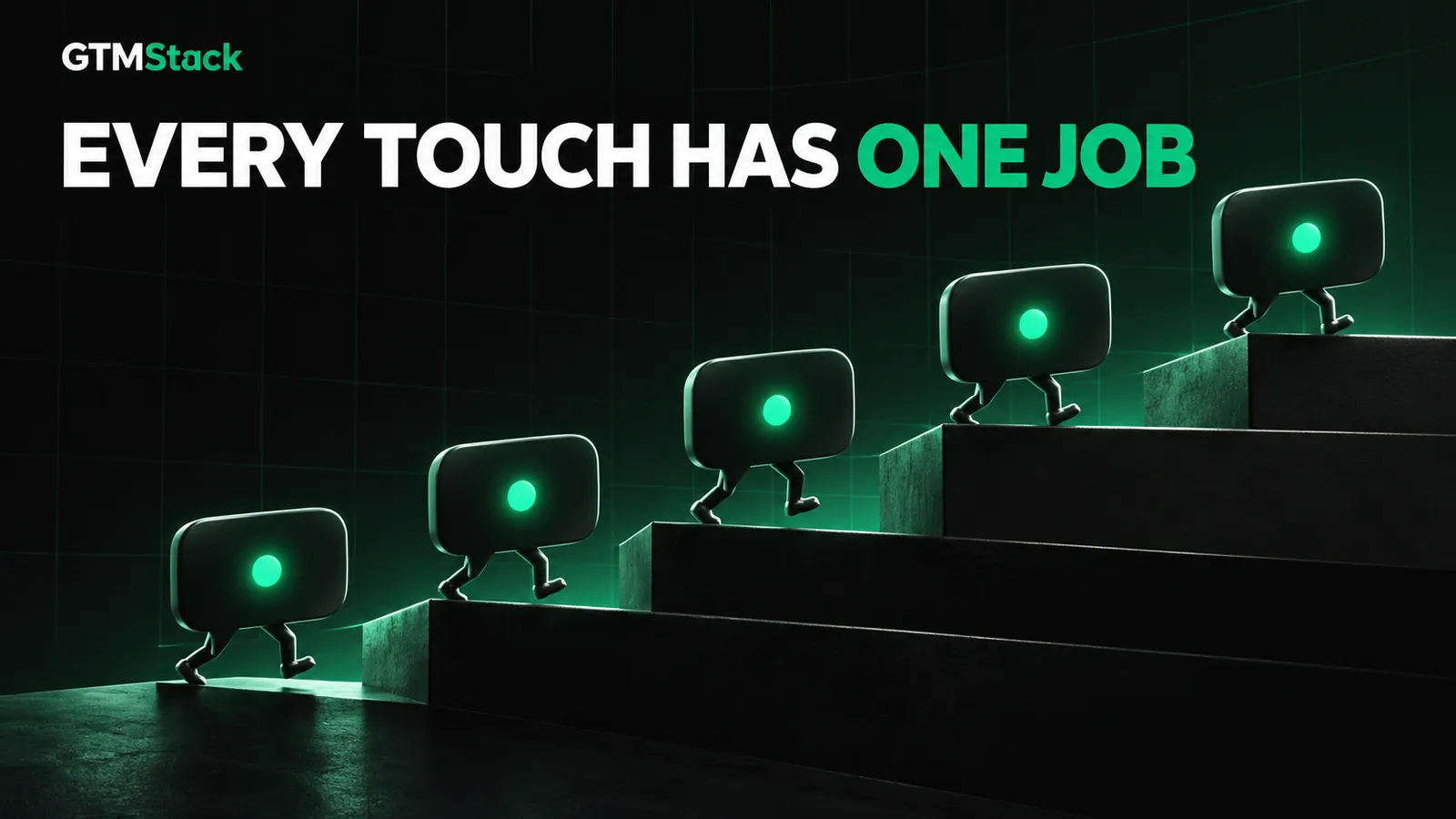
Four stages, each with one job.
Stage one: the connection request. Its job is access, and its quality is set before you write anything, by who is on the list. A short, plain note that gives a real reason for connecting can help in some audiences and hurt in others, and both blank and noted requests are normal practice. What never helps is pitching inside the request: the reader has not agreed to a conversation yet, and a pitch at this stage spends credibility you have not earned. Judge this stage on acceptance alone, and treat low acceptance as a list problem first and a copy problem second.
Stage two: the first message after acceptance. Its job is a reply, and the reliable way to earn one is to make replying easy and worthwhile. Reference something specific and true about the reader's work, then ask one question they can answer from their own experience without doing homework. Keep the product out of the opener's center. A reader who answers a genuine question has started a conversation, and conversations are where meetings come from. Our guide on personalizing LinkedIn outreach at scale covers how to produce that specificity without hand-writing every line.
Stage three: the follow-ups. Their job is to add value and renew the reason to reply. Each follow-up should bring something the previous touch did not: a short resource that matches the problem you raised, an observation about the reader's company, or a concrete example of the outcome you mentioned. A follow-up that only says you are checking in teaches the reader that ignoring you costs nothing and gains nothing, which is why bump-only sequences decay so fast.
Stage four: the close. Its job is to end well. A brief final touch that names the end of the sequence, wishes them well, and leaves a standing invitation converts the end of outreach from an awkward fade into a clean outcome. Some readers reply at the close precisely because the pressure is gone. The rest have given you a clear negative signal, which protects your list quality and your account.
How many touches should a sequence have?
Enough to give a busy reader several genuine chances to engage, and few enough that every touch can carry new substance. In practice that means a small number of well-built touches rather than a long tail of reminders, because the constraint is not the reader's inbox, it is your ability to keep adding something real. When you cannot write a follow-up that adds anything, the sequence is over, whatever the plan said.
Spacing matters as much as count. Touches landed too close together read as pressure and as automation, and they compress the reader's chances to act on any single one. Touches landed too far apart lose the thread of the conversation you started. The working principle is a human cadence: the rhythm a thoughtful person would use if they were writing to one prospect by hand, because that is the standard readers unconsciously judge against, and the standard platform safety systems are tuned around. Pacing, volume limits, and account safety are covered in the LinkedIn follow-up sequence post.
Want to put this into practice?
Reachium automates LinkedIn outreach, content publishing, and inbox management in one platform.
See Reachium →What makes one touch different from the next?
A useful test: if you swapped two touches in the sequence, would anything break? In a well-built sequence, yes. The first message depends on the connection being fresh. The value follow-up depends on the question already asked. The close depends on everything before it having happened. If your touches are interchangeable, you do not have a sequence, you have the same message sent repeatedly with minor edits, and readers can tell.
Variety of format helps the same way variety of substance does. A sequence that mixes a short text touch, a shared resource, and a direct question gives the reader different ways to engage. What should not vary is the thread: every touch should be recognizably about the same problem and the same reader, so the sequence reads as one conversation with pauses, not as separate campaigns colliding in one inbox.
How do you know if the sequence is working?
Read it stage by stage, the same discipline our response rate benchmarks post applies to the funnel as a whole. Low acceptance points at the list. Healthy acceptance with weak replies points at the first message. Replies that fade before any meeting points at the follow-ups and the ask. A sequence diagnosed by stage gets fixed at the stage that is broken. A sequence judged only on final meetings gets rewritten at random, usually starting with the opener, whether or not the opener was the problem.
Keep the definitions steady between campaigns, and keep notes on what each variant changed. A sequence is an asset that improves by iteration, and iteration is only possible when each version's structure is written down.
FAQ
Should the connection request include a note? It depends on the audience and on whether you have something true and specific to say. A genuine reason for connecting is a good note. A templated compliment or an early pitch is worse than no note at all. Whichever you choose, test it as its own variable and judge it on acceptance, not on replies it was never designed to earn.
What should a follow-up message say? Something new: a resource matched to the problem, a fresh observation, or a short example. If the follow-up could be deleted without the reader losing any information, it is a bump, and bumps train readers to ignore you. One new, relevant thing per touch is the whole rule.
When should a sequence stop? When you have made your case across a few substantive touches and the closing touch has landed. Continuing past the close damages credibility and account health for almost no upside, because a reader who has seen several good touches and stayed silent has answered. Move on, and let a future trigger, a role change, a funding event, a new post, reopen the conversation naturally.
Can a sequence be automated without sounding automated? The mechanics can be assisted: scheduling, list handling, and drafting support are normal parts of modern outbound. What cannot be automated away is the substance: the specific observation, the matched resource, the judgment to stop. Readers do not object to tools. They object to messages that contain nothing written for them, and those fail at any level of automation, including fully manual.
Want to put this into practice?
Reachium automates LinkedIn outreach, content publishing, and inbox management in one platform.
See Reachium →Sources
- Internal posts cited by slug: /linkedin-follow-up-sequence (cadence and pacing), /how-to-personalize-linkedin-outreach-at-scale (specificity at volume), /good-linkedin-response-rate (stage-by-stage funnel diagnosis). Live posts, checked 2026-10-23.
- No per-step or per-sequence reply rates are cited in this post, deliberately. Public sequence statistics are vendor-reported on undisclosed populations, and this post makes only structural claims that a reader can verify against their own funnel.
Linked sources: