By Priya Raman, AI SEO, GEO & Martech Analytics. Last updated: 2026-10-23
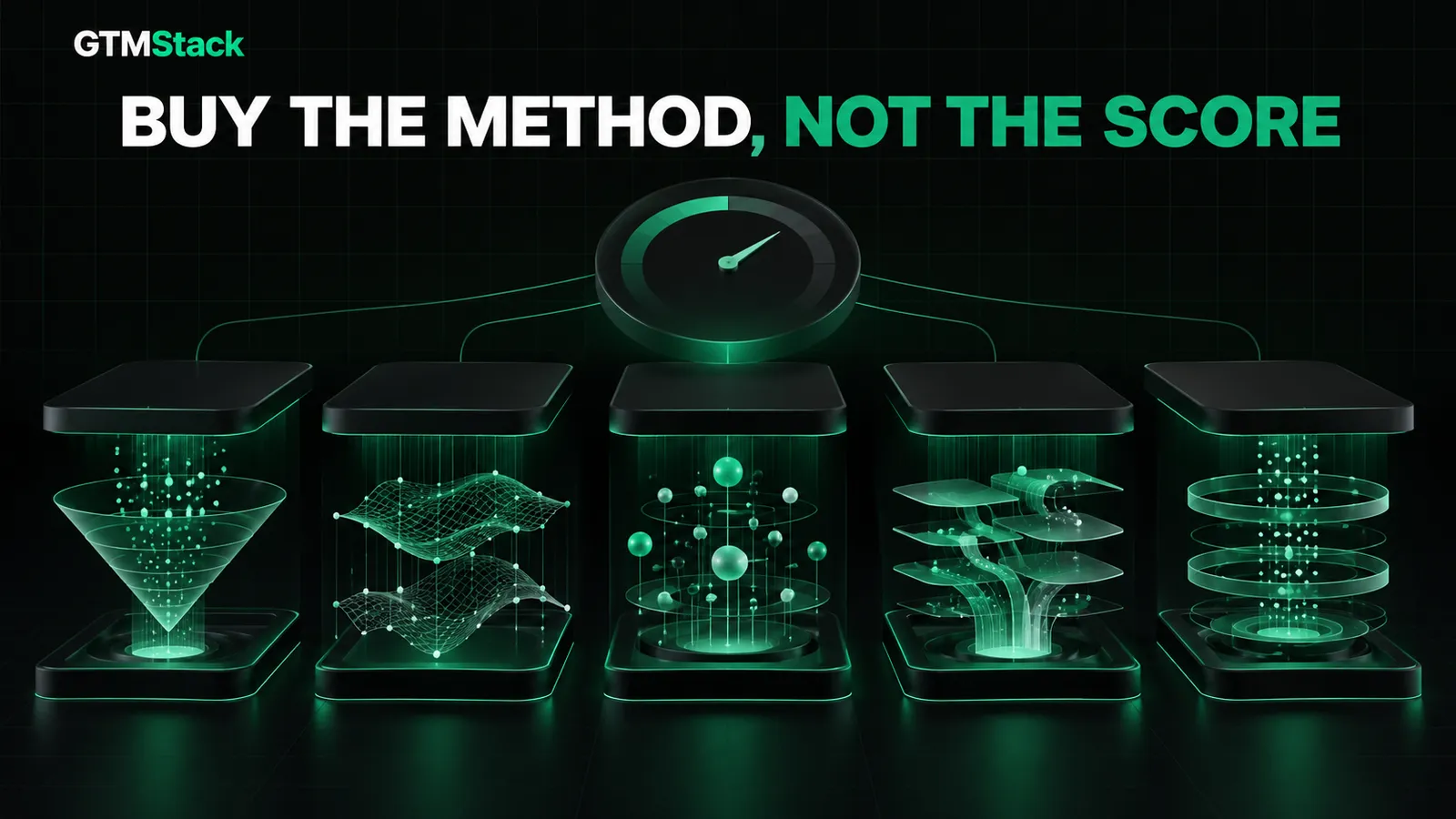
What are the five intent data collection methods?
Publisher co-op. Bombora's model: participating B2B publishers share anonymized consumption data, and accounts showing a spike on your topics get flagged. Strength: the signal is real reading behaviour on real content. Limits: weekly-ish cadence, account level only, and your topic list defines what can ever be seen.
Bidstream. Signals derived from programmatic ad bid requests, which reveal that someone at a company loaded a page in a category. Strength: enormous scale. Limit: the noisiest method; presence on a page is weak evidence of research intent. Prospeo's method table (vendor guide, checked 2026-10-23) makes the same trade-off explicit.
Review-site. G2 Buyer Intent and TrustRadius capture accounts viewing your profile, your category, or your competitors on the review platform itself. Strength: highest fidelity per event, because comparison behaviour is close to a decision. Limit: only sees buyers who use review sites, at the moment they use them.
Predictive platform. 6sense and Demandbase blend third-party intent, your own web data, and firmographic fit into stage predictions, then sell the advertising and workflow layer on top. Strength: one system from signal to action. Limits: the score is a model output you cannot fully audit, the contracts are enterprise-sized, and the platform only pays if RevOps can run it.
Visitor identification. Tools like RB2B and Leadfeeder resolve your own anonymous traffic. This is first-party data with the highest message value, and it gets its own comparison in our website visitor identification tools post.
How should a team choose?
Decide what decision the data will drive. Prioritizing a large outbound list: a co-op feed into your own scoring is usually enough, and the cheapest legitimate route. Running orchestrated ABM with ad spend attached: that is the platforms' actual product, priced accordingly, and worth it only when someone owns it. Hunting late-stage accounts evaluating competitors now: review-site intent, small and expensive per signal, is the honest tool. Working your own traffic: visitor identification, which most teams should exhaust before buying third-party anything, because the dark social and first-party signals you already own are the ones with provenance.
Then interrogate provenance before signing: which sources, what cadence, account or contact level, and can you see the underlying events or only the score. A provider that will not describe its collection method is asking you to buy the label.
Want to put this into practice?
Reachium automates LinkedIn outreach, content publishing, and inbox management in one platform.
See Reachium →FAQ
What is the difference between Bombora and 6sense? Bombora sells the signal: topic surge data from a publisher co-op, delivered as a feed for your stack. 6sense sells a platform: blended signals, predictive account scoring, and orchestration into ads and sales workflows. The Tomba comparison (vendor guide, checked 2026-10-23) states the same split: Bombora gives the raw signal, 6sense gives the decision and the action.
How much do intent data providers cost? None of the major providers publishes pricing; all sell on custom enterprise quotes. Third-party guides print ranges (for example, Happierleads' 2026 guide places Bombora at $1,500 to $5,000 plus per month and 6sense or Demandbase at $30K to $150K plus per year), but those are vendor-side estimates, not published rates, and should be treated as negotiation folklore until you hold a quote.
Is third-party intent data accurate? It varies by method, and accuracy is the wrong frame for most of it. A co-op surge accurately reports that content consumption spiked; what it cannot tell you is why, or whether a purchase is attached. Treat third-party intent as prioritization evidence, verify with first-party behaviour before outreach, and never quote a score to a prospect as if it were knowledge about them.
Should a small team buy intent data at all? Usually not first. Exhaust first-party signals (your site, your content, your CRM history) and review-site intent if your category lives there. Third-party feeds pay when the list is large enough that ordering it well is worth more than the contract, which is rarely true under a few thousand target accounts.
Sources
- Prospeo, Best Intent Data Providers in 2026: method table (co-op, bidstream, review-site, predictive and web, visitor ID) with strengths and limitations per method. Vendor guide. prospeo.io, checked 2026-10-23.
- Tomba, 6sense vs Bombora: Which Intent Data Wins in 2026: co-op size (5,000 plus B2B publishers), Company Surge description, data provider versus platform distinction. Vendor guide. tomba.io, checked 2026-10-23.
- Happierleads, B2B Intent Data Tools 2026: provider rundowns for Bombora, G2 Buyer Intent, TechTarget Priority Engine, 6sense, Demandbase, and Influ2, with estimated price ranges labelled as such in this post. Vendor guide. happierleads.com, checked 2026-10-23.
- HG Insights, Best Buyer Intent Data Providers in 2026: how co-op, review platform, technographic, and first-party signals are collected; no single best provider framing. Vendor guide. hginsights.com, checked 2026-10-23.
- Internal posts cited by slug: /what-is-intent-data and /dark-social-attribution (live); /signal-based-outbound and /website-visitor-identification-tools (staged in this wave).
Linked sources: