By Dev Anand, AI Tooling & Automation Safety. Last updated: 2026-10-23
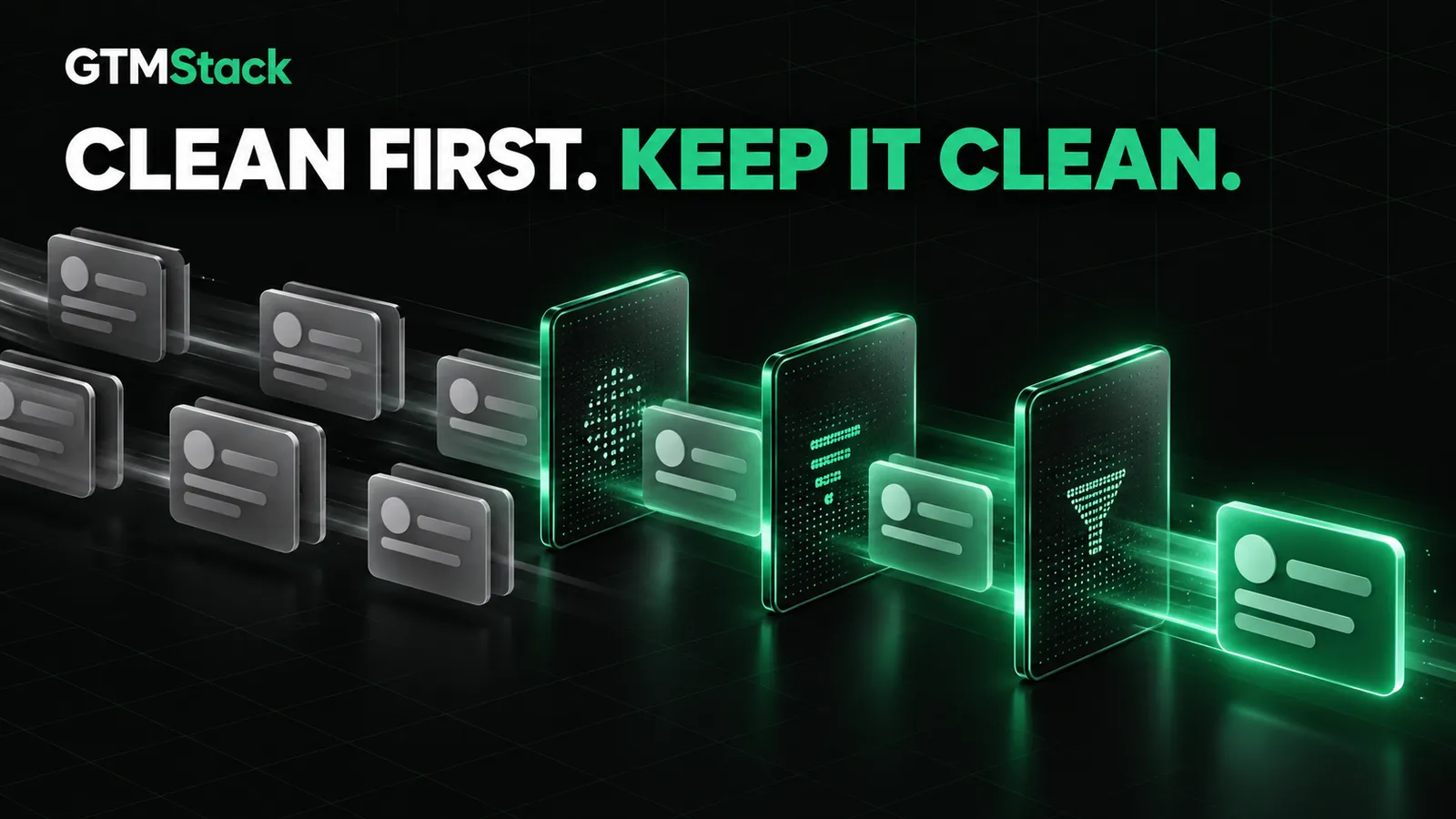
What is the right order of operations for cleaning a CRM?
1. Deduplicate. Find records describing the same person or company and merge them under written survivorship rules. Decide which system owns the merge when two systems sync (a common ruling: merge in the system of record, let the change flow downstream), and transfer every linked asset (contacts, deals, notes, tasks, attachments) to the master before removing the duplicate. Most data loss in cleanup projects happens here, in skipped transfers, not in the matching.
2. Standardize. One format for job titles, countries, phone numbers, and company names. Scoring and routing rules cannot weight seniority when the same title appears in four spellings, which is why standardization follows dedupe and precedes everything analytical.
3. Validate. Confirm surviving values are still true: emails deliverable, people still at the company, titles current. Validation separates "record exists" from "record is usable," and it is the step that turns a smaller database into a better one.
4. Enrich the survivors. Now append missing fields from outside sources, writing to empty fields by default so fresh enrichment cannot overwrite a value a rep verified by hand. Our waterfall enrichment explainer covers the multi-provider cascade pattern and its cost logic.
5. Prevent and maintain. Validation rules at every entry point (forms, imports, integrations, manual entry), duplicate scans on a schedule, and a named owner. Data decays continuously as people change jobs and companies; the guides in this category treat hygiene as a cadence for that reason, not an annual event.
What does dirty data actually break?
The damage is rarely the duplicate itself. It is everything downstream: the same account routed to two reps, the buying signal split across duplicate records so no one sees the full picture (LeadAngel's lead deduplication guide describes exactly this failure), forecasts built on doubled pipeline, and attribution flags attached to records that later merge away. It also corrupts the definitions layer: sourced versus influenced pipeline flags are only as trustworthy as the records carrying them. And when enrichment and outbound tools sync against a dirty CRM, the mess propagates outward into every connected system, including the LinkedIn CRM integration layer.
Want to put this into practice?
Reachium automates LinkedIn outreach, content publishing, and inbox management in one platform.
See Reachium →FAQ
How often should CRM data be cleaned? Continuously, in small passes: duplicate scans on a weekly or monthly schedule, validation refreshed on a cadence matched to how fast your segment changes jobs, and a deeper audit quarterly. The annual big-bang cleanup is the symptom of having no cadence.
Should I deduplicate before or after enriching? Before. Enrichment appends data to records; applying it to duplicates means paying several times for the same entity and then resolving the conflicting appended values during the merge. Cleanlist's data cleaning guide states the same rule: cleaning and enrichment are run as one project but never as one step.
What matching key should I use for deduplication? Email for contacts and domain for accounts are the standard primary keys, supplemented by fuzzy matching on name plus company for the records where keys are missing or mistyped. Exact keys alone miss a substantial share of real duplicates.
Will cleaning break my workflows or reports? It can, which is why the safety sequence exists: back up, work in a sandbox, merge a sample batch, and verify that activity history, associations, and automation triggers survived before running at scale. Merges performed through the CRM's own tooling are generally not undoable, so the sample batch is not optional ceremony.
Sources
- Cleanlist, How to Clean Your CRM Data: A Step-by-Step Guide for RevOps, and CRM Data Cleaning: Order of Operations, Tools and Costs (2026): five-phase sequence, cleaning versus enrichment distinction, enrich-after-dedupe rule, write-to-empty-fields default. Vendor guides. cleanlist.ai, checked 2026-10-23.
- LeadAngel, Lead Deduplication: A Complete Guide for RevOps Teams (2026): routing and reporting damage from duplicates, 20 to 30 percent duplicated or outdated estimate labelled as industry estimate, lead-to-account matching failures. Vendor guide. leadangel.com, checked 2026-10-23.
- Crono, Stop Data Loss: Three Step CRM Deduplication for Salesforce, HubSpot, and Zoho (2026): exact-key miss rate estimate of 30 to 40 percent, attribute-level survivorship, backup-sandbox-sample merge sequence. Vendor guide. crono.one, checked 2026-10-23.
- Lemlist, 4 Matching Methods to Kill CRM Duplicates (2026): master record selection, field mapping before merge, activity history preservation, import and sync prevention checklist. Vendor guide. lemlist.com, checked 2026-10-23.
- Internal posts cited by slug: /waterfall-enrichment and /linkedin-crm-integration (live); /marketing-sourced-vs-influenced-pipeline (staged in this wave).
Linked sources: